What Age Do Babies Roll Over From Back to Side
How your personality changes as you age
(Image credit:
Getty Images
)
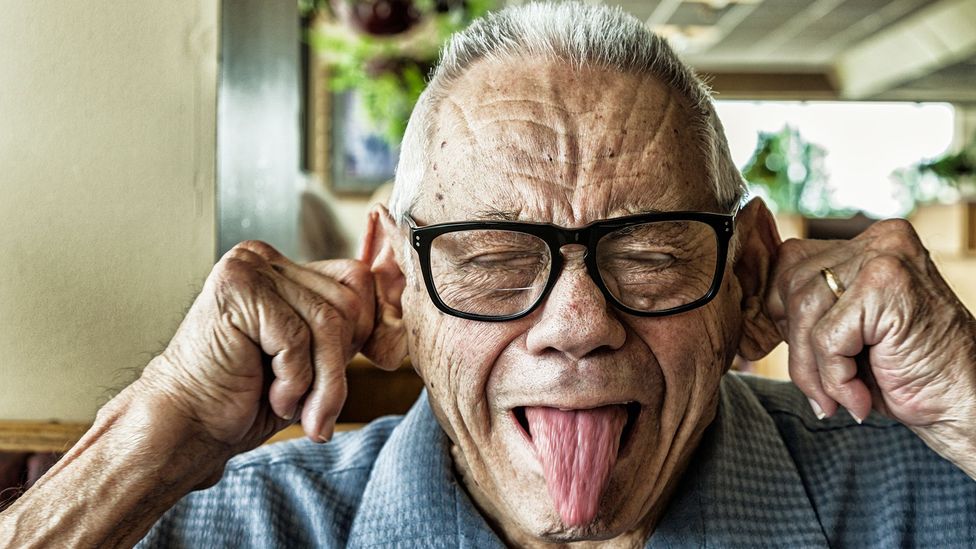
Our personalities were long idea to exist stock-still by the time we achieve our 30s, just the latest research suggests they modify throughout our lives – and bring some surprising benefits.

"Mr President, I want to raise an consequence that I recall has been lurking out at that place for two or iii weeks and cast it specifically in national security terms…" said the journalist Henry Trewhitt, as he locked President Ronald Reagan with a steady, serious gaze.
It was October 1984 and Reagan was on the debating excursion, battling to remain in office for a second term. He had already performed poorly against his main rival a few weeks earlier. At present in that location were whispers that, at 73 years old, he was simply too old for the job.
After all, at the fourth dimension, Reagan was already the oldest United states President in history. His predecessor had gone for days without sleep during the Cuban missile crisis. Trewhitt wanted to know: did Regan accept whatsoever doubts that he could office in such circumstances?
You might also like:
● The hobby that helps yous live to 100
● Could eating carbs help us live longer
● Why you are but as old every bit you feel
"Not at all, Mr Trehwitt," replied Reagan, holding back a smile. "And I desire you to know that also I will not brand age an issue of this campaign – I am not going to exploit, for political purposes, my opponent's youth and inexperience." His response was met with raucous laughter and applause – and preceded a landslide victory in the election.

Ronald Regan was the oldest US President in history when he ran for a second term in 1984 (Credit: Getty Images)
Reagan's quip, yet, held more truth than he knew. He didn't just have experience on his side, he would too accept had a "mature personality".
Nosotros're all familiar with the concrete transformation that ageing brings: the peel loses its elasticity, the gums recede, our noses grow, hairs sprout upwards in peculiar places – while besides disappearing entirely from others – and those precious inches of height to which we cling start to slink away.
Now, after decades of enquiry into the effects of ageing, scientists are uncovering some other, more mysterious alter.
"The decision is exactly this: that we are not the same person for the whole of our life," says René Mõttus, a psychologist from the University of Edinburgh.
Most of us would like to think of our personalities as relatively stable throughout our lives. But enquiry suggests this is not the case. Our traits are e'er shifting, and by the fourth dimension we're in our 70s and 80s, nosotros've undergone a meaning transformation. And while nosotros're used to couching ageing in terms of deterioration and decline, the gradual modification of our personalities has some surprising upsides.
We become more conscientious and agreeable, and less neurotic. The levels of the "Nighttime Triad" personality traits, Machiavellianism, narcissism, and psychopathy also tend to go down – and with them, our run a risk of antisocial behaviours such equally crime and substance abuse.
Research has shown that we develop into more altruistic and trusting individuals. Our willpower increases and we develop a ameliorate sense of humour. Finally, the elderly have more control over their emotions. Information technology's arguably a winning combination – and one which suggests that the stereotype of older people every bit grumpy and curmudgeonly needs some revision.
Far from beingness fixed in babyhood, or around the age of 30 – every bit experts thought for years – information technology seems that our personalities are fluid and malleable. "People become nicer and more socially adjusted," says Mõttus. "They're increasingly able to residual their own expectations of life with societal demands."

While our personalities are constantly changing, they practice so relative to those around united states (Credit: Getty Images)
Psychologists call the process of change that occurs as we age "personality maturation". Information technology's a gradual, imperceptible alter that begins in our teenage years and continues into at least our eighth decade on the planet. Intriguingly, information technology seems to be universal: the trend is seen across all human cultures, from Guatemala to Bharat.
"Generally it'south controversial to put value judgments on these personality changes," says Rodica Damian, a social psychologist at the University of Houston. "But at the same time nosotros practice have testify that they're beneficial." For instance, low emotional stability has been linked to mental health problems, higher bloodshed rates, and divorce. Meanwhile, she explains that the partner of someone with high conscientiousness will probably be happier, because they're more than likely to do dishes on time, and less likely to cheat on their partner.
It would be reasonable to think that this continual process of modify would make the concept of personality fairly meaningless. Merely that's not entirely truthful. That's considering there are two aspects to personality change: average changes, and relative changes. It turns out that, while our personalities shift in a sure direction as we age, what nosotros're similar relative to other people in the aforementioned age group tends to remain fairly stable.
For instance, a person'south level of neuroticism is probable to become downward overall, but the most neurotic 11-year-olds are by and large nevertheless the most neurotic 81-year-olds. These rankings are our most enduring characteristics, and distinguish united states of america from everyone else.
"In that location is a core of who nosotros are in the sense that we practise maintain our rankings relative to other people to some extent," says Damian. "Only relative to ourselves, our personalities are not set in stone – we can change."
How do these personality changes develop? "This is the large debate in the field," says Mõttus.
Because personality maturation is universal, some scientists think that far from being an adventitious side-result of having had longer to learn the rules, the ways our personalities change might exist genetically programmed – perhaps even shaped by evolutionary forces.
On the other mitt, some call back that our personalities are partly forged by genetic factors, then sculpted past social pressures over the class of our lives. For example, inquiry by Wiebke Bleidorn, a personality psychologist at the University of California, Davis, institute that, in cultures where people were expected to grow up more than chop-chop – get married, start working, have adult responsibilities – their personalities tend to mature at a younger age.
"People are merely kind of forced to change their behaviour and, over fourth dimension, to become more responsible. Our personalities alter to help u.s. cope with life's challenges," says Damian.
But what happens when we achieve very sometime historic period?
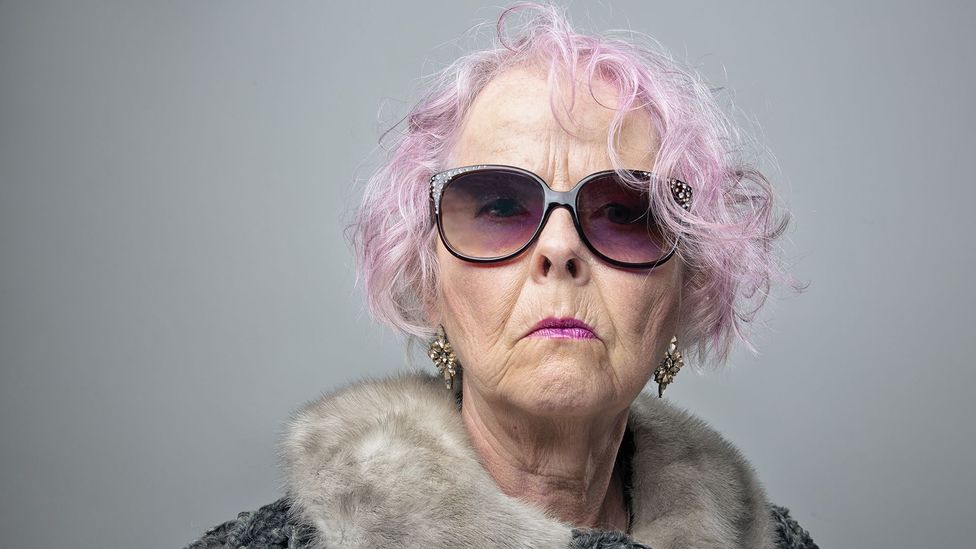
Those with higher self-control are more likely to be healthy in afterwards life (Credit: Getty Images)
There are 2 possible ways to study how we change over our lifespan. The offset is to take a large group of people of lots of unlike ages, and so expect to see how their personalities are different. One problem with this strategy is that it is piece of cake to accidentally mistake generational traits that accept been sculpted by the civilization of a particular time menstruum – such as prudishness or an inexplicable adoration of custard creams and sherry – for changes that occur every bit you age.
The culling is to take the same group of people and follow them as they abound up.
This is exactly what happened with the Lothian Nascence Cohort – a group of people who had their personality traits and intelligence examined in June 1932 or June 1947, when they were still at school. At the time, they were effectually xi years erstwhile. Together with colleagues from the University of Edinburgh, Mõttus tracked down hundreds of the same people when they were in their 70s or 80s, and gave them two more identical tests, several years apart.
"Because we had two different cohorts of people, and both of them were measured at two occasions, nosotros were able to use both strategies at once," says Mõttus. This was lucky, because the results were remarkably different for the 2 generations.
While the younger grouping's personalities remained more or less the same overall, the older grouping'southward personality traits brainstorm to shift, so that on average, they became less open up and extraverted, as well as less amusing and conscientious. The benign changes that had been occurring throughout their lives started to reverse.
"I retrieve this makes sense, considering in old age things commencement happening to people at a faster pace," says Mõttus, who points out that these people's health might have been in decline, and they're likely to have started losing friends and relatives. "This has some impact on their active engagement with the earth."
No ane has yet looked at whether this trend would continue into our 100s. Enquiry into Japanese centenarians has found that they tend to score highly for conscientiousness, extraversion, and openness, but they may have had more of these characteristics to begin with – possibly this even contributed to their longevity.
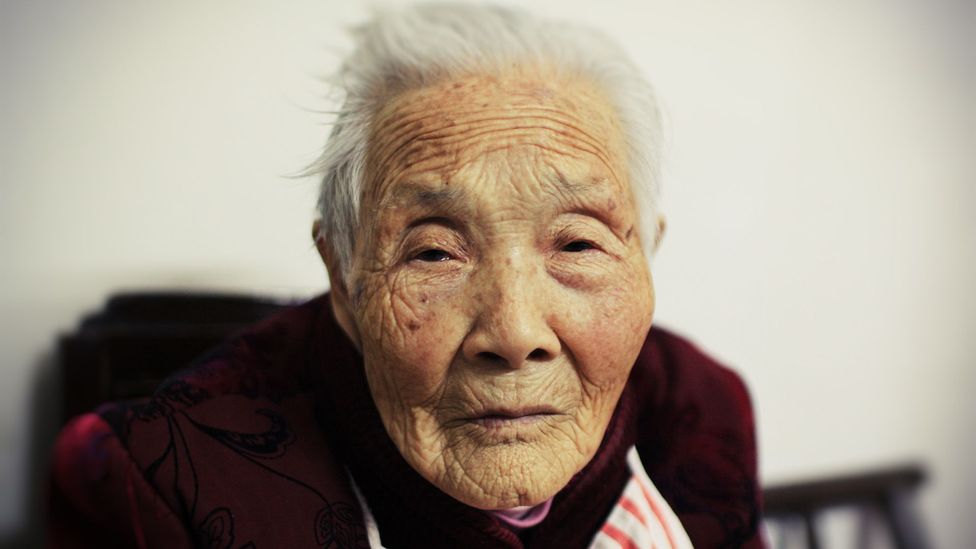
Understanding how certain personality traits are linked to health could help predict take chances of disease (Credit: Getty Images)
In fact, our personalities are intrinsically linked to our wellbeing equally we age. For example, those with higher self-control are more likely to be good for you in later life, women with higher levels of neuroticism are more likely to experience symptoms during the menopause, and a degree of narcissism has been associated with lower rates of loneliness, which itself is a risk factor for an earlier decease.
In the future, understanding how certain traits are linked to our health – and how nosotros can expect our personalities to evolve throughout our lifespan – might help to predict who is most at take a chance of certain health problems, and arbitrate.
But there's another do good to the research. "I was just giving a talk in a prison house yesterday," says Mõttus. "At that place was one question they were actually interested in: practise people change at all? Well the big-picture finding is that yeah, they do." This ways that, as far equally he is concerned, there isn't any strong evidence to propose that people can use their personality as an excuse for their behaviour.
The noesis that our personalities alter throughout our lives, whether we want them to or non, is useful evidence of how malleable they are. "It's important that nosotros know this," says Damian. "For a long time, people idea they didn't. Now we're seeing that our personalities can adapt, and this helps u.s. to cope with the challenges that life throws at us."
If cypher else, it gives us all something to wait forward to as nosotros get older, and find out who we will go.
--
Bring together i million Future fans by liking us on Facebook , or follow us on Twitter or Instagram .
If y'all liked this story, sign up for the weekly bbc.com features newsletter , called "The Essential List". A handpicked selection of stories from BBC Future, Culture, Worklife, and Travel, delivered to your inbox every Friday.
Source: https://www.bbc.com/future/article/20200313-how-your-personality-changes-as-you-age
0 Response to "What Age Do Babies Roll Over From Back to Side"
Postar um comentário